Why Pollinators Matter
Pollinators come in a wide variety of forms. They are primarily bees, butterflies, moths, flies, beetles, birds, and bats that fertilize plants by moving pollen. They are essential for the reproduction of 80% of the world’s flowering plants and over three-quarters of our staple food crops!
They provide critical ecological services by supporting biodiversity and food security, and contribute about $270 billion to the global economy. It is estimated that pollinators are responsible for one out of every three bites of food we eat, primarily in fruits, vegetables, and nuts.
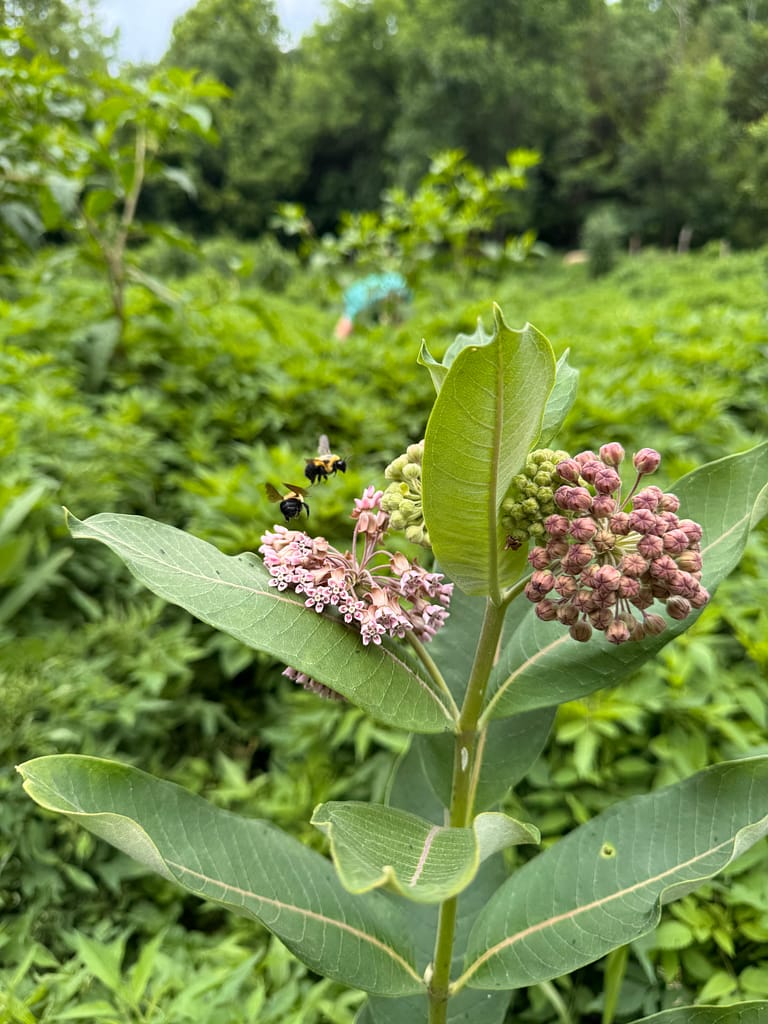
Pollinators in our Prairie.
Pollinators Are In Decline
We all know how important honey bees are, but there is much more to the pollination story. Bees are the most effective pollinators, with over 4,000 native species in the US alone! Many native bee species, including bumble bees, mining bees, sweat bees, carpenter bees, leafcutter bees, and mason bees, are solitary, visiting your flowers without much fanfare. Even some wasps will visit flowers for nectar and help with pollination.
Unfortunately, populations of pollinators are in decline worldwide primarily due to habitat loss, pesticide exposure, climate change, and disease. For example, the decline of the Monarch butterfly has become so severe that scientists are now forecasting how soon it will go extinct.
What we can do in our own yards is plant a variety of native plants that bloom from spring through fall, avoid using pesticides, and provide a natural habitat. Many bees and butterflies require specific native host plants and nectar or pollen sources. Studies have shown that pesticides can be harmful to pollinators. Providing habitat can simply mean leaving small areas of bare soil for ground-nesting bees, as well as some dead wood and leaf litter for shelter.
Creating a Pollinator Garden
We are doing all of these things at the Kirby Nature Preserve, and we are taking it one step further! With the help of volunteers, we are creating a “Pollinator Garden” in the front lawn of the Preserve. It is in a prominent location visible to all visitors, whether it is for a meeting, an event, or a hike.
The groundbreaking has already begun with the suffocating of weeds and raking and mounding of 20 cubic yards of topsoil to create visual interest (and to hide the access pipe to the sanitary sewer). Soon, the area will be seeded with a wide variety of native plants to provide a home for pollinators.
The results will not happen overnight, as these plants do most of their growing underground in the first year, but we are very excited about how valuable this area will be to the local pollinators. One of my favorite pollinators is the Monarch butterfly, which should be heavily attracted to the new garden as well.
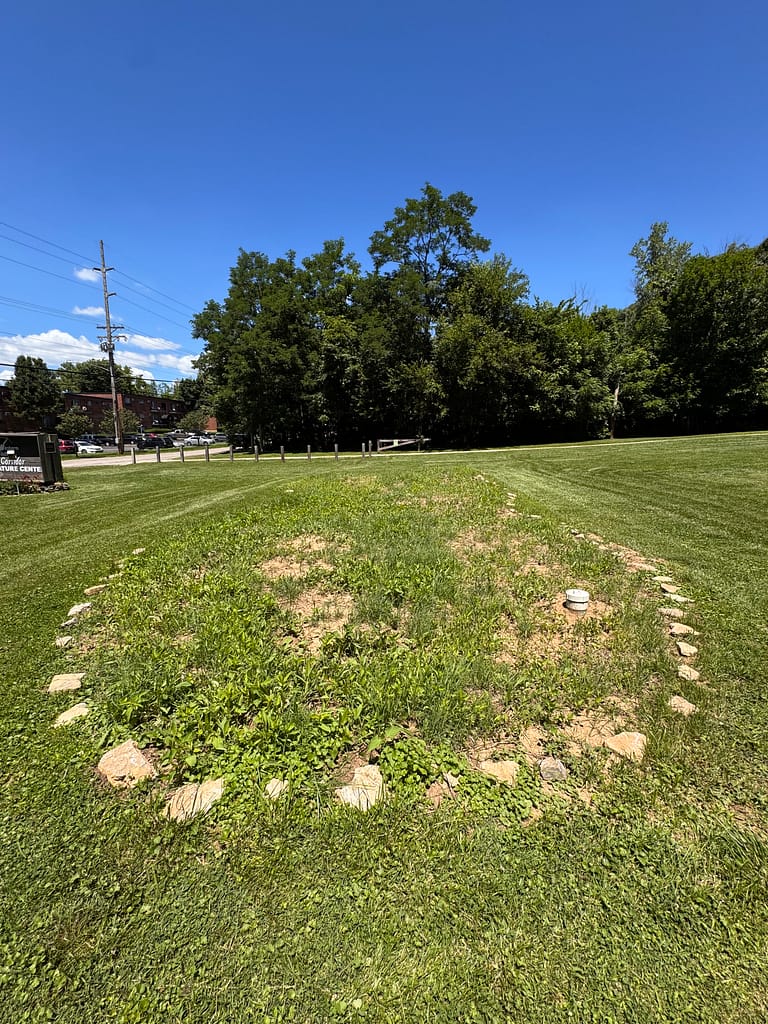
Progress of Pollinator Habitat.
We plan to eventually register the site with Monarch Watch as an official “Monarch Waystation!” Monarch Watch is a citizen science project with the University of Kansas that tags thousands of Monarchs each year.
I have had the pleasure of working with Monarch butterflies for more than 40 years, and have been tagging them myself with other volunteers since 1983. I had the opportunity to visit an overwintering site in Mexico in 1991.
Monarch butterflies are absolutely fascinating! Not only are they some of the most beautiful butterflies, they also make the longest migration of any insect. Often called the “International Traveler,” Monarchs fly from southern Canada all the way to Mexico each year. Even more amazing, they return to the very same small sites annually, even though no individual butterfly has ever made the journey before!
Join me for “Those Amazing Monarchs” on September 26th at 2:00 p.m. at the Kirby Nature Center to learn more about Monarchs, help tag live Monarchs, and check out the progress on the Waystation.